The field brief
The migration is a moving season, not a scheduled performance.
The herds respond to rainfall, grazing, water, and instinct across the Serengeti–Mara ecosystem. Use the months as a strong planning pattern—not live tracking and never a guarantee of a river crossing.
The Great Migration is often reduced to one dramatic river photograph. In reality, it is a continuous ecological story: calving on the southern short-grass plains, long northbound columns, the Western Corridor, northern river country, and the rain-led return south.
Interactive field atlas
Trace a year across the Serengeti.
Choose a month or let the cycle play. The solid boundaries show Serengeti National Park and Ngorongoro Conservation Area; the moving focus shows the approximate seasonal centre of the herds.
Seasonal guide, not live tracking. Actual herd positions vary with rain and grazing.
Geographic boundaries and rivers: OpenStreetMap contributors. Seasonal focus: illustrative Eagle Overland interpretation.
Read the migration as a cycle
UNESCO describes an annual circular trek of roughly 1,000 kilometres involving more than a million wildebeest and hundreds of thousands of other ungulates. That scale makes the movement visible—but not predictable to the day. Rain can hold herds in one landscape, split them into several groups, or move them earlier than a simple calendar suggests.
The wider story
When the herds move, an entire food web moves with them.
The migration is not one species travelling alone. Predators, scavengers, birds, grasslands, rivers, and rain are all part of the same annual pulse.
January to March: life on the southern plains
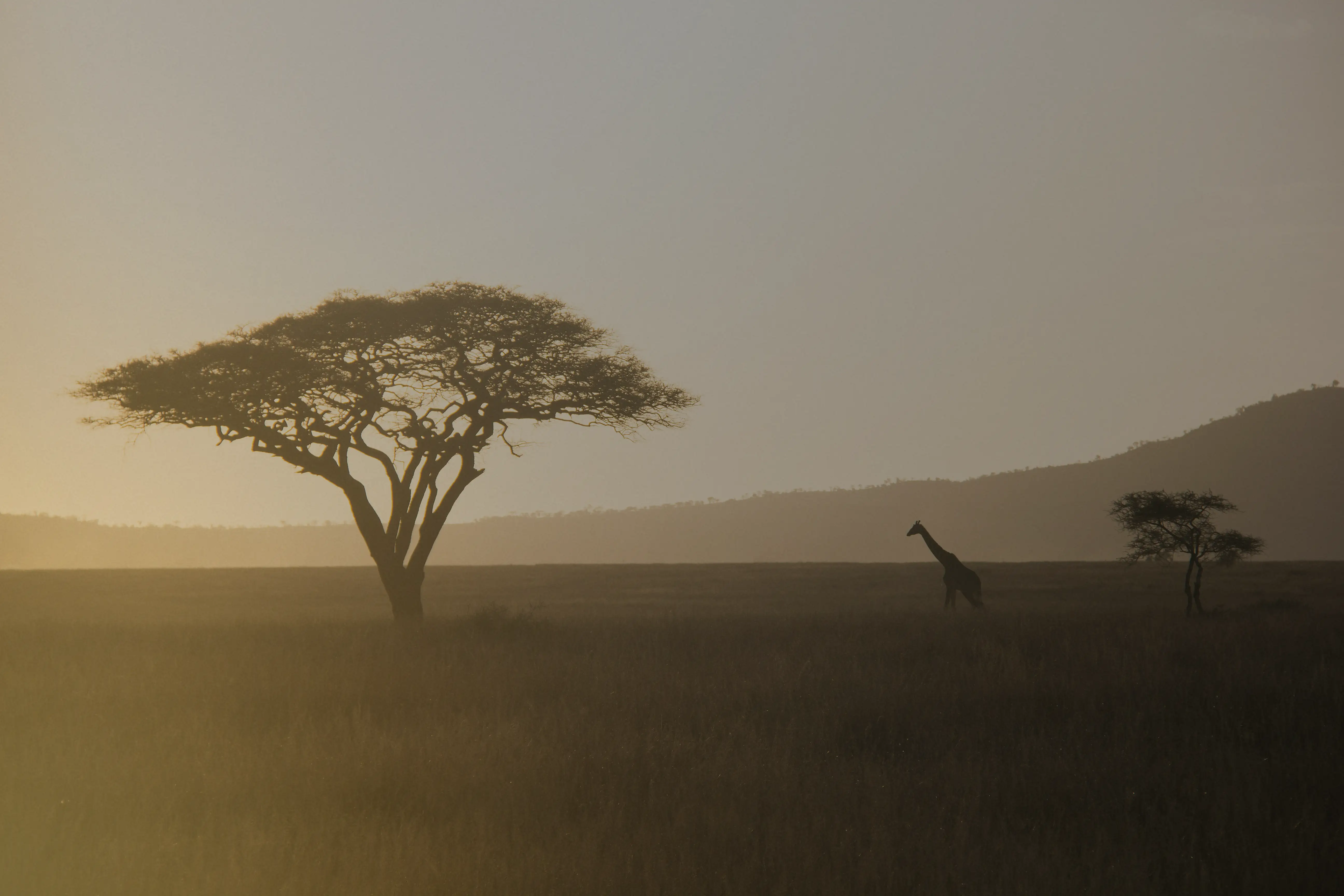
On the short-grass plains around Ndutu and the Serengeti–Ngorongoro boundary, the migration’s story becomes intimate. Pregnant wildebeest gather where mineral-rich grasses support mothers and young. Tanzania National Parks identifies January and February as the calving period; February is often the emotional centre of the season.
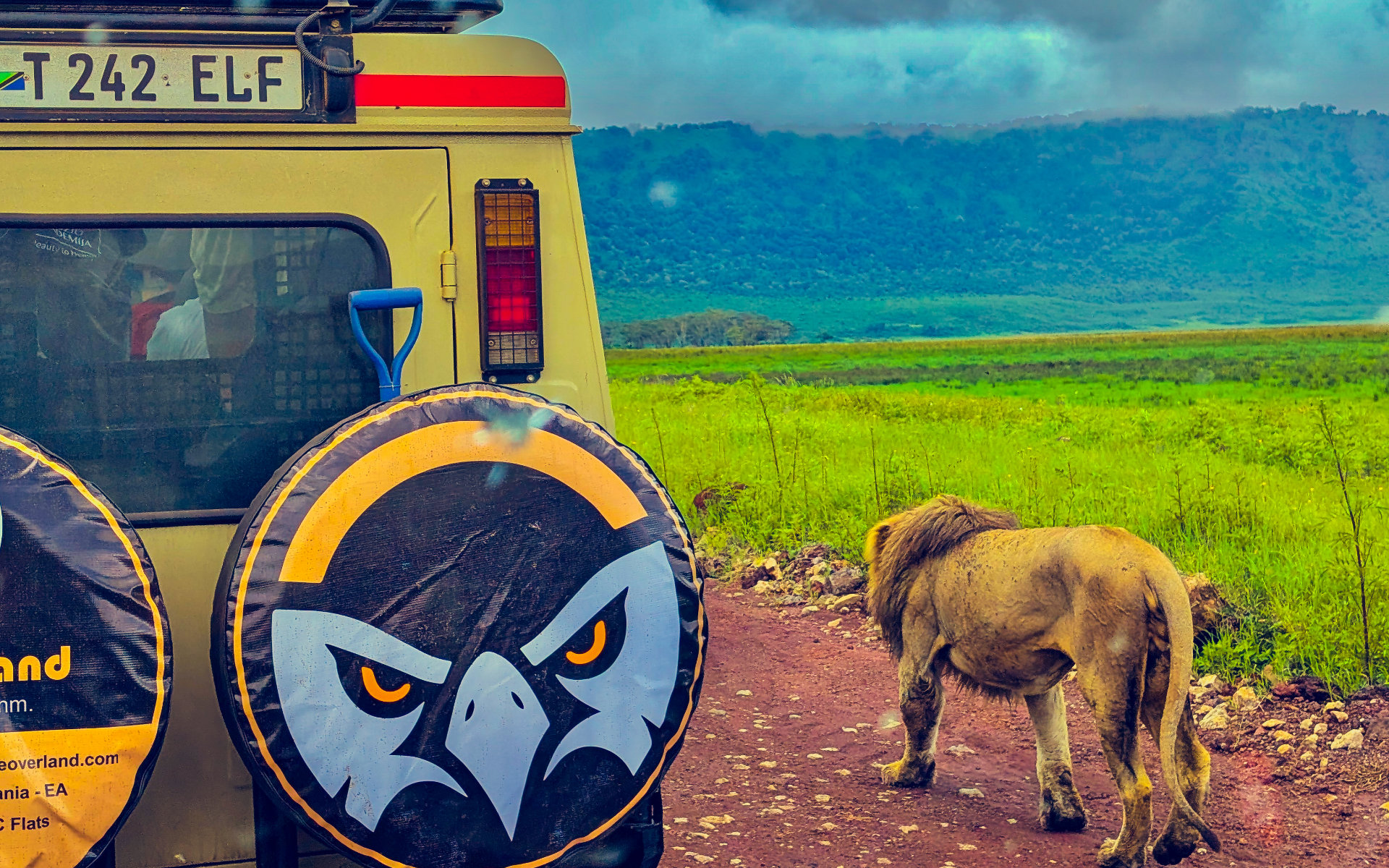
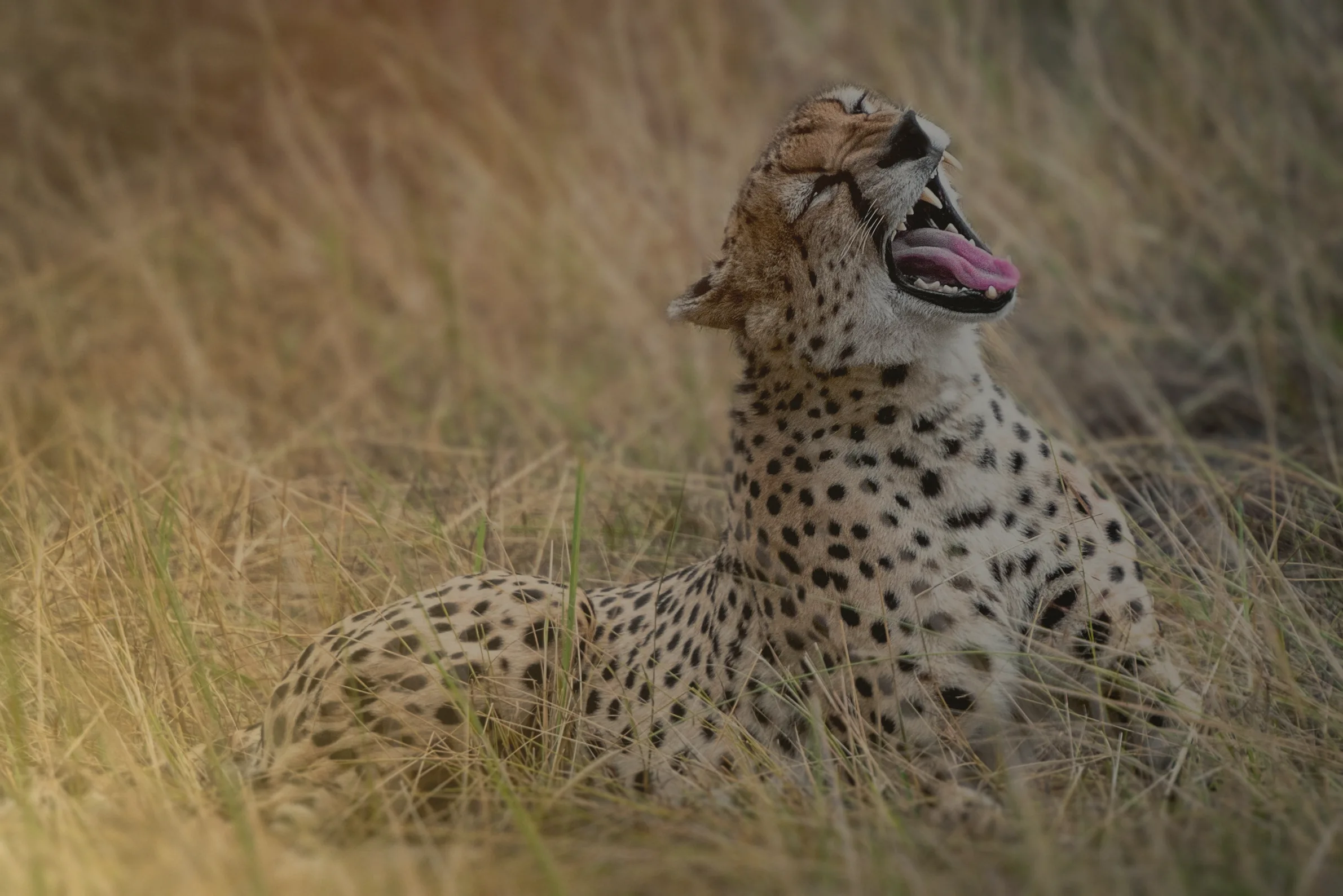
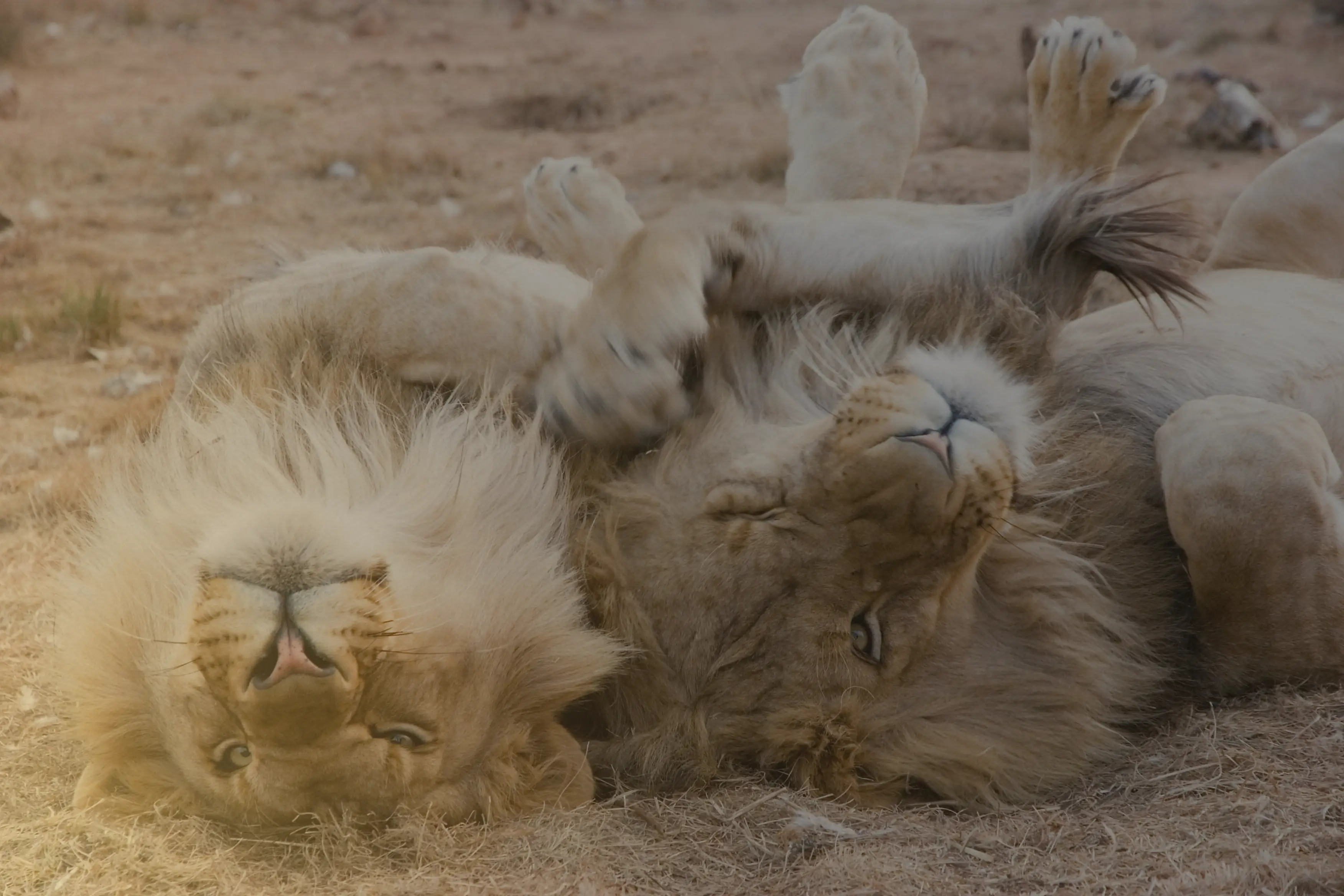
This is not only a nursery. Lions, cheetahs, hyenas, and smaller predators follow the concentration of prey. For travellers, the reward is not one event but a full field narrative: birth, vigilance, feeding, weather, and movement unfolding across the same plain.
April to May: the first long northbound lines
As the southern grass is consumed and the long rains reshape water and grazing, the herds begin to leave the plains. Movement can spread through the central Serengeti and bend toward the Western Corridor. This is a transitional season—less about a single landmark, more about scale.
The most powerful view may be a horizon that keeps moving: animals, dust, cloud, and road all pointing north.
Wet tracks and changing conditions matter on self-drive routes. Allow more time than the distance suggests, confirm current road guidance, and do not build a plan that depends on one exact herd location.
June to July: the Western Corridor and Grumeti
By early dry season, many herds travel through the western Serengeti and toward the Grumeti river system. Four Seasons’ seasonal overview places the Western Corridor movement broadly from May to July. The landscape tightens around woodland, riverine vegetation, and water.
Route note
Do not confuse “possible” with “promised.”
Grumeti activity depends on where the herds are, how water is running, and what the season has done. A strong route should still be rewarding if no crossing occurs.
August to October: northern Serengeti and the Mara
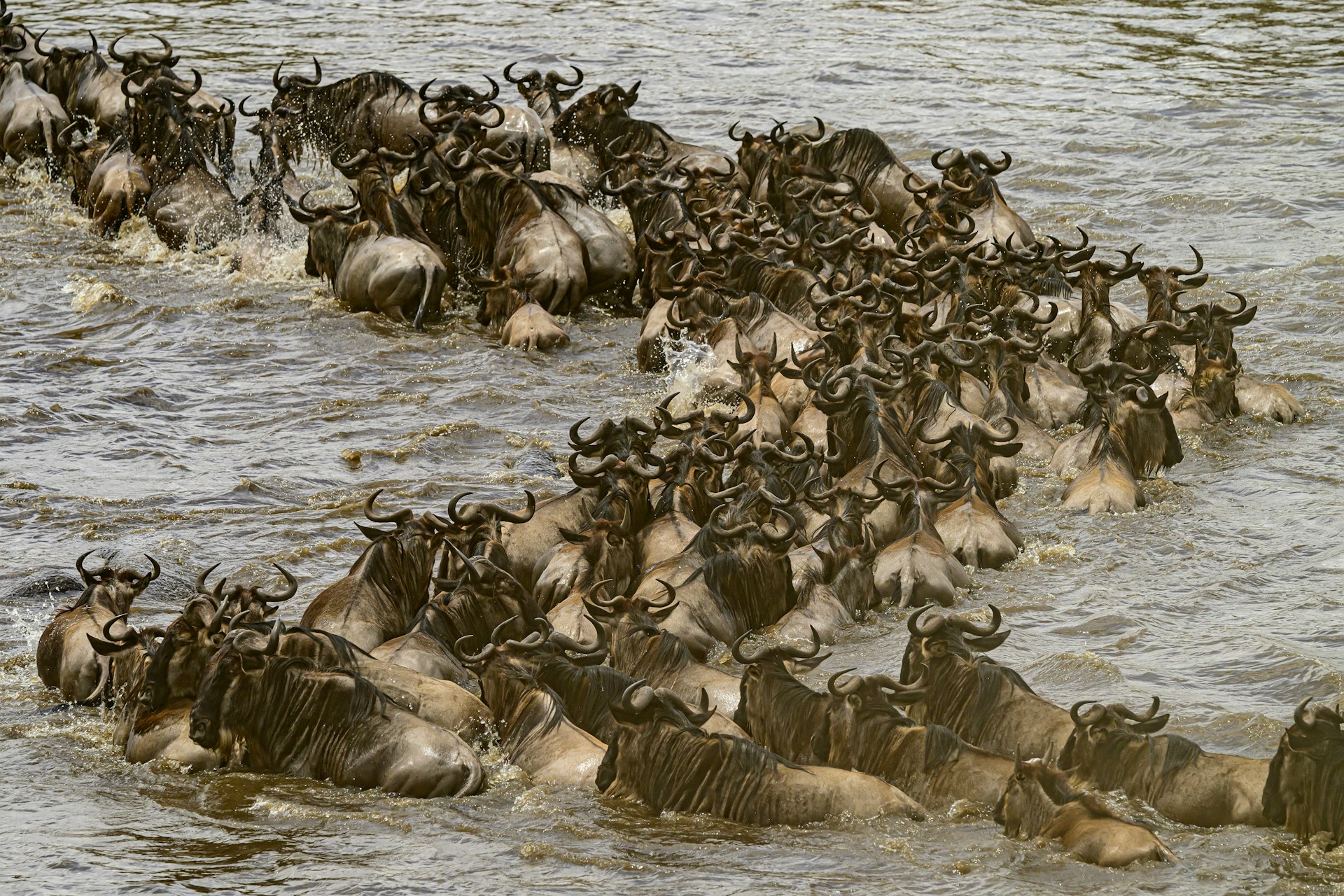
The dry-season focus often shifts into northern Serengeti and the wider Mara ecosystem. Herds may cross rivers more than once, remain on one bank, disperse, or move between Tanzania and Kenya. Kogatende is an important northern reference point, but the spectacle is never confined to a single viewpoint.
Crossings attract vehicles as well as animals. TANAPA’s Mara River crossing guidance emphasizes stationary viewing from designated areas and avoiding pressure on congregating herds. The goal is to witness natural behaviour without changing it.
November to December: rain writes the return route
With the short rains, green growth begins to draw the herds away from the northern dry-season range. Movement often stretches through the central Serengeti before gathering again toward the southern plains. The loop closes gradually, not all at once.
This can be an excellent time for travellers who value changing skies, fewer fixed expectations, and the feeling of a landscape waking up. It is also a reminder that the migration belongs to rainfall, not the calendar.
Choose the experience before the month
“When should I go?” becomes easier when you decide what you want to feel. Calving, movement, river country, dry-season concentration, and green-season atmosphere are different safari stories.
Build your migration window
What do you want to witness?
Choose the feeling first. We will show the strongest broad window, the landscape to prioritise, and the compromise to keep in mind.
January–March · Southern plains
Calves, watchful mothers, and predators close behind.
Prioritise Ndutu and the southern short-grass plains. Stay several nights so the experience is shaped by the landscape—not a rushed search for one sighting.
- Base the route around
- Ndutu & southern Serengeti
- Accept the trade-off
- Rain can slow tracks and shift daily plans
A migration-aware self-drive plan should include:
- A route matched to the current season, not last year’s exact dates.
- At least two nights in the main wildlife area where practical.
- Realistic gate, road, fuel, and daylight timing.
- Accommodation or campsites that fit the expected regional focus.
- Offline maps and a clear route briefing before departure.
- Flexibility to adjust when rain, roads, or wildlife move differently.
Build around the season
Let the migration guide the route—not control it.
Tell us your travel month, group size, and preferred mix of camping and lodges. We will help shape a realistic self-drive journey around the strongest seasonal possibilities.
Watch responsibly: space is part of the experience
Responsible viewing protects both the animals and the quality of the safari. Keep to permitted roads, obey ranger instructions, reduce noise, avoid blocking movement, and never position the vehicle to force a photograph.
- Let wildlife choose the line.Do not close gaps or cut across a moving herd.
- Stay still near crossings.Movement and engine noise can disturb animals already under pressure.
- Read the whole landscape.The migration is bigger than one dramatic moment.
- Follow current park guidance.Conditions and designated viewing areas can change.
Field sources & map note
How to use this guide
The seasonal pattern is grounded in information from UNESCO’s Serengeti National Park profile, Tanzania National Parks, and TANAPA’s Mara River Crossing Guideline. Map boundaries and rivers come from OpenStreetMap-derived geographic data. Seasonal positions are intentionally approximate.
Great Migration questions
What is the best month to see the Great Migration in Tanzania?
There is no single best month. Choose January–March for the southern-plains and calving story, May–July for northward and western movement, or August–October for northern Serengeti and possible Mara River activity. Rain can shift the pattern.
Can I guarantee a Mara River crossing?
No. Crossings are natural, unscheduled events. Herds may wait, turn away, cross elsewhere, or move when no vehicle is present. A responsible itinerary never promises one.
Is the migration in Tanzania all year?
The migration is a year-round cycle across the wider Serengeti–Mara ecosystem. The main concentrations change location through the seasons, and parts of the herds may be spread across several areas.
Can I follow the migration on a self-drive safari?
Yes. Match the route to the season, use a suitable 4x4, plan realistic driving days, confirm current road and park information, carry offline navigation, and keep flexibility in the itinerary.
Does the interactive map show live herd locations?
No. It is a seasonal planning atlas built from established movement patterns. Confirm current conditions closer to travel with park authorities, camps, guides, and the Eagle Overland route team.